
In the fast-paced world of e-commerce, staying top-of-mind with your customers is crucial. Push notifications offer a direct and immediate way to connect, delivering timely and relevant messages right to their devices. If you’re looking to boost engagement, drive sales, and improve customer retention, understanding and implementing push notifications effectively is key. This guide will walk you through the fundamentals, benefits, best practices, and how push notifications can transform your e-commerce strategy.
What are Push Notifications and How Do They Work?
Push notifications are short, clickable messages that pop up on a user’s mobile or desktop device. Unlike emails, which require users to actively check their inboxes, push notifications deliver information instantly, even when the user isn’t actively browsing your website or app.
Here’s a simplified breakdown of how they work:
- A user visits your Shopify store and grants permission to receive push notifications.
- This permission is typically managed through a service like Pushloop, which handles the technical aspects of sending and tracking notifications.
- When you want to send a message, you create a push notification campaign within the Pushloop dashboard.
- Pushloop then sends the notification to the user’s device via the appropriate platform (e.g., Apple Push Notification Service (APNs) for iOS, Firebase Cloud Messaging (FCM) for Android).
- The user sees the notification and can choose to interact with it, typically by tapping or clicking to be directed to a specific page on your website.
Effectively, push notifications offer a direct line of communication with your customers, allowing you to deliver personalized experiences and timely updates.
Benefits of Using Push Notifications for E-Commerce
Implementing push notifications into your e-commerce strategy unlocks a range of benefits that can significantly impact your bottom line. They offer a unique advantage over traditional marketing channels like email, providing a more immediate and engaging way to connect with your audience.
Increase Engagement, Drive Sales, Improve Customer Retention
- Increase Engagement: Push notifications cut through the noise, grabbing users’ attention with timely updates and personalized offers. Use them to announce new product launches, highlight limited-time promotions, or simply remind customers about your brand.
- Drive Sales: Time-sensitive offers and promotions delivered via push notifications can create a sense of urgency, encouraging immediate purchases. Consider sending notifications about flash sales, discounts on specific product categories, or free shipping offers.
- Improve Customer Retention: Keep customers coming back by sending personalized recommendations based on their past purchases or browsing history. Offer exclusive deals to loyal customers or provide helpful updates about their orders and shipping status.
For example, Pushloop’s abandoned cart recovery feature automatically sends a push notification to customers who leave items in their cart, reminding them to complete their purchase. This can lead to a significant increase in conversion rates without relying solely on email marketing.
In essence, push notifications enable you to create a more personalized and engaging customer experience, fostering loyalty and driving repeat business.
Different Types of Push Notifications
Not all push notifications are created equal. Understanding the different types and when to use them is crucial for maximizing their impact.
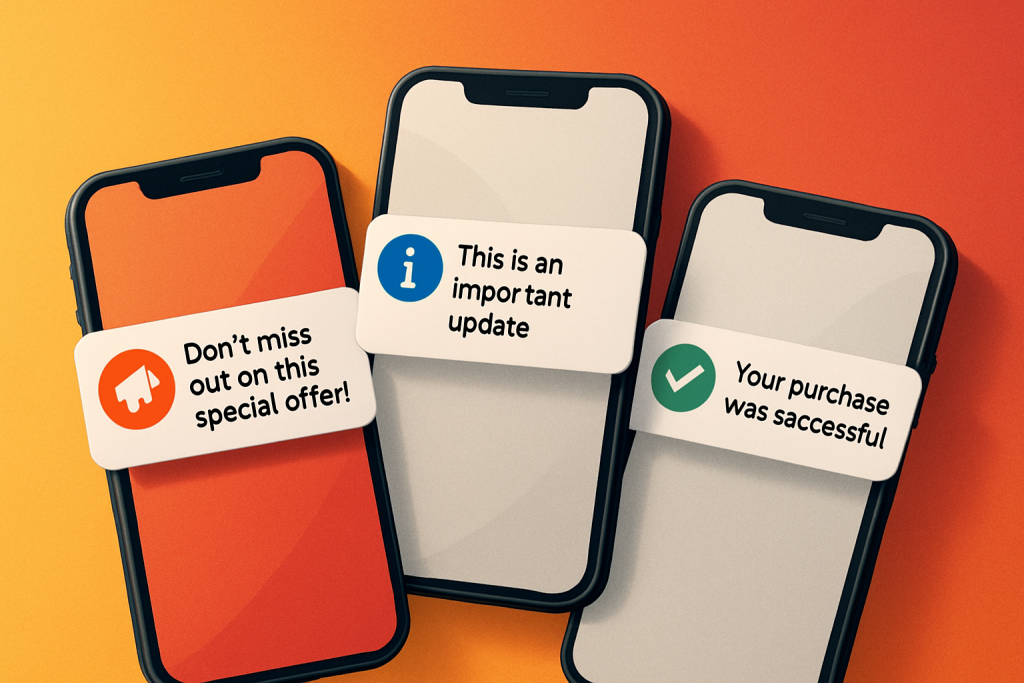
Promotional, Transactional, Informational
- Promotional Notifications: These notifications are designed to drive sales and promote special offers.
- Examples include: Announcing a new product launch, advertising a flash sale, offering a discount code.
- Best used to: Encourage purchases and increase revenue.
- Transactional Notifications: These notifications provide updates on order status, shipping information, and account activity.
- Examples include: Order confirmation, shipping updates, delivery notifications.
- Best used to: Provide excellent customer service and build trust.
- Informational Notifications: These notifications share helpful information, product guides or industry news.
- Examples include: Product how-to guides, tips for using a product, industry-related news.
- Best used to: Keep customers informed and engaged with your brand.
Best Practices for Writing Effective Push Notification Copy
Crafting compelling push notification copy is an art. Here are some key principles to keep in mind:
- Be concise: Keep your messages short and to the point. Users are more likely to read and interact with notifications that are easy to understand at a glance.
- Personalize your messages: Use customer data to tailor your notifications to individual preferences and behaviors. For example, address the customer by name or recommend products based on their past purchases.
- Create a sense of urgency: Use language that encourages immediate action, such as “Limited-time offer” or “Don’t miss out!”
- Use strong calls to action: Tell users exactly what you want them to do, such as “Shop now,” “Learn more,” or “Get your discount.”
- Test and optimize: Experiment with different messaging styles and calls to action to see what resonates best with your audience.
For example, instead of sending a generic notification like “New products available,” try something more personalized and engaging, such as “Hey [customer name], check out our new collection of [product category]! Shop now and get 15% off.”
Measuring the Success of Your Push Notification Campaigns
To ensure your push notification strategy is effective, it’s crucial to track and analyze key metrics. This data will provide insights into what’s working and what needs improvement.
Here are some important metrics to monitor:
- Delivery Rate: The percentage of notifications that were successfully delivered to users’ devices.
- Open Rate (or Click-Through Rate – CTR): The percentage of users who opened or clicked on your notification.
- Conversion Rate: The percentage of users who completed a desired action (e.g., making a purchase) after clicking on your notification.
- Unsubscribe Rate: The percentage of users who opted out of receiving push notifications.
By tracking these metrics, you can identify areas for optimization and refine your push notification strategy to achieve better results. A/B testing different versions of your notifications can help you determine which messaging styles, calls to action, and timing strategies resonate best with your audience.
Conclusion
Push notifications are a powerful tool for e-commerce businesses looking to increase engagement, drive sales, and improve customer retention. By understanding the fundamentals, benefits, best practices, and different types of push notifications, you can create a highly effective marketing strategy that resonates with your audience.
Remember to personalize your messages, create a sense of urgency, and always track your results to optimize your campaigns. With a well-executed push notification strategy, you can build stronger relationships with your customers and drive significant growth for your e-commerce business.

