
In the competitive world of e-commerce, understanding and optimizing the customer journey is paramount to success. It’s no longer enough to simply have great products; you need to guide your customers seamlessly from initial awareness to loyal advocacy. This article will delve into the intricacies of the customer journey, providing you with actionable strategies to enhance every touchpoint and boost your Shopify store’s performance.
What is the Customer Journey and Why Does it Matter?
The customer journey represents the complete experience a customer has with your brand, from their first interaction to long-term engagement. It encompasses every touchpoint – website visits, social media interactions, email communications, and more. Understanding this journey allows you to:
- Improve Customer Satisfaction: By identifying and addressing pain points, you can create a smoother, more enjoyable experience.
- Increase Conversions: Optimizing each stage of the journey encourages visitors to become paying customers.
- Boost Customer Retention: Providing excellent service and personalized experiences fosters loyalty and repeat purchases.
- Enhance Brand Advocacy: Happy customers are more likely to recommend your brand to others, driving organic growth.
Ignoring the customer journey can lead to:
- High Abandonment Rates: Frustrated customers may abandon their carts or leave your website altogether.
- Negative Reviews: Poor experiences can result in negative reviews and damage your brand reputation.
- Missed Revenue Opportunities: Failing to nurture customers throughout their journey can lead to lost sales and potential long-term revenue.
Key Stages of the Customer Journey
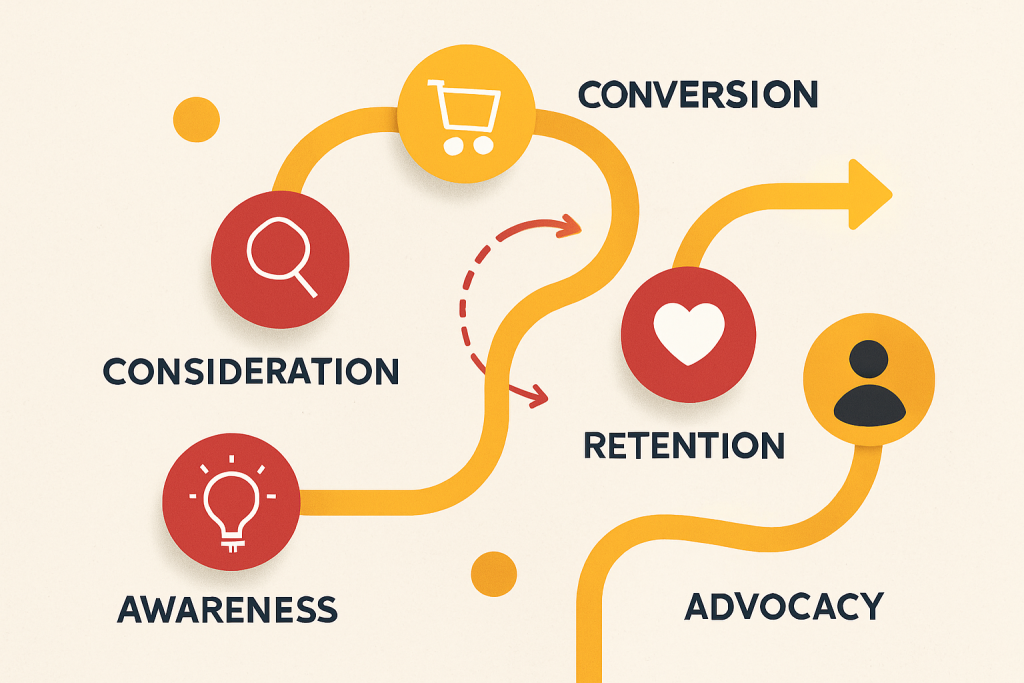
While the specifics may vary depending on your industry and target audience, the customer journey typically consists of these five key stages:
Awareness: Attracting Potential Customers
This is the stage where potential customers first become aware of your brand and products. Effective strategies for this stage include:
- SEO Optimization: Ensuring your website ranks highly in search engine results for relevant keywords.
- Social Media Marketing: Engaging with potential customers on social media platforms and running targeted ad campaigns.
- Content Marketing: Creating valuable and informative content that attracts and educates your target audience.
- Paid Advertising: Utilizing platforms like Google Ads and social media ads to reach a wider audience.
Consideration: Building Trust and Interest
In this stage, customers are actively researching and comparing different options. Your goal is to build trust and demonstrate the value of your products. Key tactics include:
- Detailed Product Descriptions: Providing comprehensive information about your products, including features, benefits, and specifications.
- High-Quality Product Images and Videos: Showcasing your products in an appealing and informative way.
- Customer Reviews and Testimonials: Leveraging social proof to build credibility and trust.
- Comparison Guides and Blog Posts: Helping customers understand the differences between your products and those of your competitors.
Decision: Converting Visitors into Buyers
This is the critical stage where customers decide whether or not to make a purchase. Optimizing the checkout process and addressing any potential concerns is essential. Focus on:
- Streamlined Checkout Process: Making it easy for customers to complete their purchase quickly and efficiently.
- Multiple Payment Options: Offering a variety of payment methods to accommodate customer preferences.
- Clear Shipping and Return Policies: Providing transparent information about shipping costs, delivery times, and return procedures.
- Live Chat Support: Offering real-time assistance to answer customer questions and address any concerns.
- Abandoned Cart Recovery: Re-engaging customers who have left items in their cart without completing the purchase.
Pushloop’s abandoned cart recovery feature can be particularly effective in this stage, automatically sending push notifications to remind customers about their abandoned carts and encourage them to complete their purchase. This helps recapture lost sales and improves conversion rates.
Retention: Fostering Customer Loyalty
Acquiring new customers is important, but retaining existing customers is even more cost-effective. Focus on providing exceptional service and building long-term relationships through:
- Personalized Email Marketing: Sending targeted emails with relevant offers and promotions.
- Loyalty Programs: Rewarding repeat customers with exclusive benefits and discounts.
- Proactive Customer Support: Addressing customer issues promptly and efficiently.
- Post-Purchase Surveys: Gathering feedback to identify areas for improvement.
Advocacy: Turning Customers into Brand Ambassadors
The ultimate goal is to turn satisfied customers into brand advocates who actively promote your products and services. Encourage advocacy by:
- Encouraging Reviews and Testimonials: Making it easy for customers to leave reviews and share their experiences.
- Referral Programs: Incentivizing customers to refer their friends and family.
- Social Media Engagement: Encouraging customers to share their experiences on social media.
- Building a Strong Brand Community: Creating a sense of belonging and encouraging customers to connect with each other.
How to Map and Analyze Your Customer Journey
Mapping your customer journey involves visualizing the steps a customer takes when interacting with your brand. This process helps you identify potential pain points and opportunities for improvement. To effectively map your customer journey:
- Define Your Target Audience: Create detailed customer personas to represent your ideal customers.
- Identify Key Touchpoints: List all the points of interaction a customer has with your brand.
- Analyze Customer Behavior: Use analytics tools to track customer behavior at each touchpoint.
- Gather Customer Feedback: Conduct surveys, interviews, and focus groups to understand customer experiences.
- Visualize the Journey: Create a visual representation of the customer journey, highlighting key stages and touchpoints.
Once you’ve mapped your customer journey, analyze the data to identify areas where you can improve the customer experience. Look for:
- Pain Points: Areas where customers are experiencing frustration or difficulty.
- Drop-off Points: Stages where customers are leaving the journey without completing the desired action.
- Opportunities for Improvement: Areas where you can enhance the customer experience and drive better results.
Tools and Techniques for Customer Journey Optimization
Several tools and techniques can help you optimize your customer journey, including:
- Analytics Platforms: Google Analytics, Adobe Analytics, and similar tools provide valuable insights into customer behavior on your website.
- Customer Relationship Management (CRM) Systems: CRMs help you manage customer interactions and personalize the customer experience.
- Heatmaps and Session Recordings: Tools like Hotjar and Crazy Egg provide visual representations of how users interact with your website.
- A/B Testing: Testing different versions of your website and marketing materials to see which performs best.
- Customer Feedback Tools: Surveys, polls, and feedback forms allow you to gather direct feedback from your customers.
Remember to use these tools in conjunction with a deep understanding of your customer’s needs and motivations. Data alone is not enough; you need to interpret the data and translate it into actionable strategies.
Conclusion: Deliver Exceptional Customer Experiences
Optimizing the customer journey is an ongoing process that requires continuous monitoring, analysis, and improvement. By understanding your customer’s needs and providing a seamless, personalized experience, you can increase conversions, foster loyalty, and drive long-term growth for your Shopify store. Don’t underestimate the power of a well-designed customer journey – it can be the key to unlocking your e-commerce success.

