
Push notifications are a powerful tool for e-commerce businesses to re-engage customers, drive sales, and improve overall customer retention. But are you *really* maximizing their potential? The key to unlocking the true power of push notifications lies in constant optimization, and that’s where A/B testing comes in. By strategically testing different elements of your push notifications, you can learn what resonates best with your audience and significantly improve your results.
Understanding A/B Testing and Its Benefits
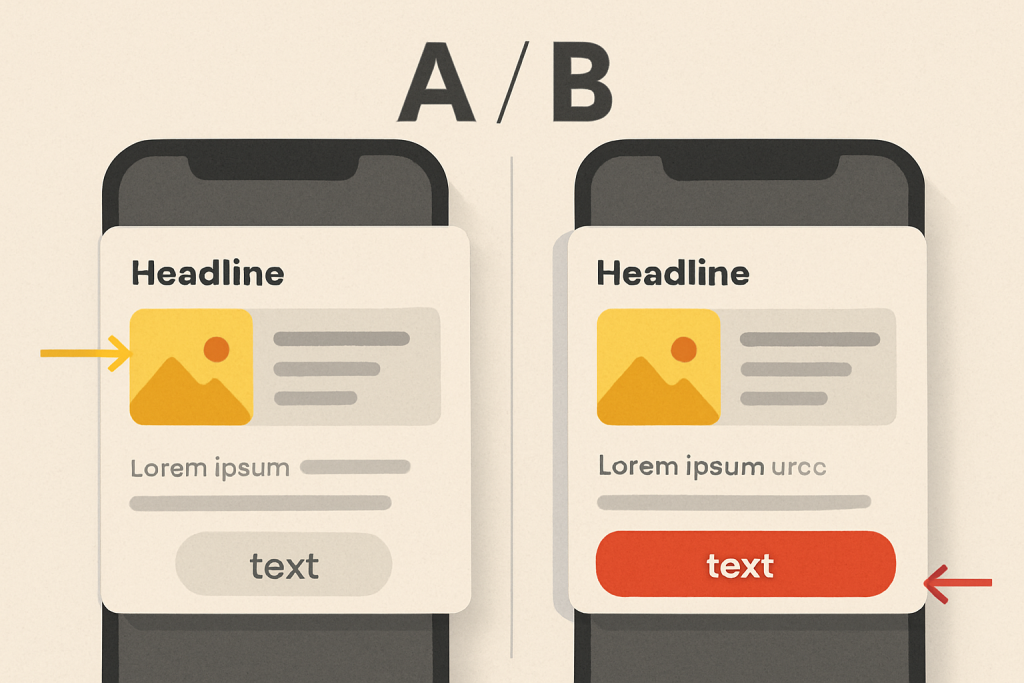
A/B testing, also known as split testing, is a method of comparing two versions of something to see which one performs better. In the context of push notifications, this means sending two slightly different versions of a notification to a segment of your audience and measuring which version achieves a higher conversion rate, click-through rate, or other relevant metric.
The benefits of A/B testing push notifications are numerous:
- Improved Engagement: Discover what motivates your customers to click and engage with your notifications.
- Higher Conversion Rates: Optimize your calls to action and messaging to drive more sales.
- Reduced Abandoned Carts: Fine-tune your abandoned cart recovery notifications to entice customers to complete their purchases. Pushloop’s abandoned cart recovery feature can be significantly enhanced by A/B testing different message variations to identify the most effective strategy for re-engaging customers and boosting conversions.
- Increased Customer Retention: Craft notifications that provide value and keep customers coming back for more.
- Data-Driven Decisions: Make informed decisions based on real data, rather than relying on guesswork.
- Better ROI: Get more out of your push notification efforts by optimizing for maximum impact.
A/B testing allows you to move beyond assumptions and understand what truly resonates with your customer base. It’s an iterative process of continuous improvement that can lead to significant gains in your e-commerce performance.
Key Elements to A/B Test
When it comes to A/B testing push notifications, several key elements can be tested to optimize for performance. Here are some of the most impactful areas to focus on:
Headlines, Body Copy, Images, Call to Actions
These are the core components of any push notification, and each offers opportunities for optimization:
- Headlines: The headline is the first thing users see, so it needs to be attention-grabbing and compelling. Test different lengths, tones, and value propositions.
- Body Copy: The body copy provides more detail and should entice users to take action. Experiment with different messaging, offers, and urgency cues.
- Images: Visuals can significantly boost engagement. Test different types of images, such as product photos, lifestyle shots, or promotional graphics.
- Call to Actions (CTAs): The CTA tells users what you want them to do. Test different wording, button styles, and placements to see what drives the most clicks.
Here are some specific A/B test ideas for each element:
- Headlines:
- Question vs. Statement
- Including a number (e.g., “50% Off”) vs. Not Including a Number
- Using Emojis vs. Not Using Emojis
- Body Copy:
- Benefit-focused vs. Feature-focused
- Personalized vs. Generic
- Urgent vs. Non-urgent
- Images:
- Product Image vs. Lifestyle Image
- Image with Text vs. Image without Text
- Different Color Palettes
- Call to Actions:
- “Shop Now” vs. “Learn More” vs. “Get Yours”
- Using Emojis vs. Not Using Emojis
- Different Button Colors
Setting Up A/B Tests for Push Notifications
Setting up A/B tests for push notifications doesn’t have to be complicated. Here’s a simplified process:
- Define Your Goal: What do you want to achieve with this test? (e.g., Increase click-through rate, drive more sales, reduce abandoned carts)
- Choose Your Variable: Select one element of your push notification to test (e.g., headline, body copy, image, CTA). Only test one variable at a time to ensure accurate results.
- Create Your Variations: Develop two versions of your push notification with different values for the variable you’re testing.
- Segment Your Audience: Divide your audience into two equal groups. Ensure that the groups are representative of your overall customer base.
- Run the Test: Send each variation to one of the audience segments. Use a push notification platform (like Pushloop) that supports A/B testing.
- Collect Data: Track the performance of each variation, focusing on the metric that aligns with your goal.
- Analyze Results: Determine which variation performed better and declare a winner.
- Implement the Winner: Use the winning variation in your future push notification campaigns.
- Repeat: Continue testing different elements to further optimize your results.
Analyzing A/B Testing Results
Once your A/B test is complete, it’s crucial to analyze the results accurately. Don’t jump to conclusions based on superficial observations. Look at the data and determine whether the difference in performance between the two variations is statistically significant.
Here are some key metrics to consider:
- Click-Through Rate (CTR): The percentage of users who clicked on your push notification.
- Conversion Rate: The percentage of users who completed a desired action (e.g., made a purchase) after clicking on your push notification.
- Open Rate: Although Pushloop uses *browser* push notifications, it’s helpful to look at open rates of email notifications with similar content.
- Unsubscribe Rate: The percentage of users who unsubscribed from your push notifications.
Use a statistical significance calculator to determine whether the difference in performance between the two variations is likely due to chance or a real effect. If the difference is statistically significant, you can confidently declare a winner.
Best Practices for A/B Testing
To ensure that your A/B tests are effective and provide meaningful insights, follow these best practices:
- Test One Variable at a Time: Changing multiple elements simultaneously makes it impossible to determine which change caused the difference in performance.
- Use a Large Enough Sample Size: Ensure that your audience segments are large enough to produce statistically significant results.
- Run Tests for a Sufficient Duration: Give your tests enough time to gather enough data to account for variations in user behavior.
- Document Your Tests: Keep a record of your tests, including the variables tested, the results, and your conclusions.
- Be Patient: A/B testing is an iterative process that takes time and effort. Don’t get discouraged if your initial tests don’t produce significant results. Keep experimenting and learning.
- Focus on the Customer: Always keep your customer’s needs and preferences in mind when designing your A/B tests.
Conclusion
A/B testing is an essential practice for any e-commerce business looking to maximize the effectiveness of its push notifications. By systematically testing different elements and analyzing the results, you can gain valuable insights into what resonates with your audience and drive significant improvements in engagement, conversions, and customer retention. Leverage tools like Pushloop to make A/B testing seamless and optimize your push notification strategy for unparalleled success. Don’t leave your push notification performance to chance – start A/B testing today!

