
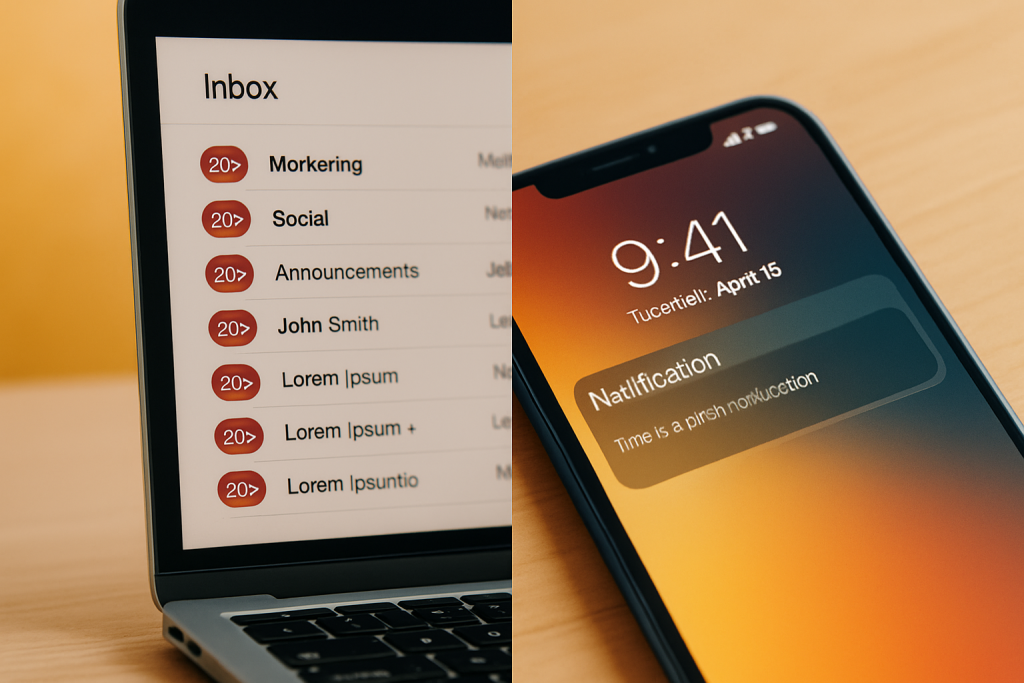
In the ever-evolving landscape of digital marketing, e-commerce businesses are constantly seeking the most effective ways to connect with their customers. Two channels that have consistently proven their worth are email marketing and push notifications. But which one reigns supreme in 2025? The answer, as you might suspect, isn’t straightforward. It depends on your specific goals, target audience, and the overall customer experience you’re trying to create. Let’s dive into a comprehensive comparison to help you decide how to best leverage these powerful tools.
Understanding the Strengths and Weaknesses of Email Marketing
Email marketing has been a cornerstone of digital communication for decades, and for good reason. It offers several key advantages:
- Personalization: Email allows for highly personalized messaging based on customer data, purchase history, and browsing behavior.
- Segmentation: You can segment your audience into specific groups and tailor your content accordingly.
- Detailed Content: Email provides ample space for detailed product descriptions, storytelling, and rich media.
- Measurable Results: Email marketing platforms offer robust analytics to track open rates, click-through rates, conversions, and more.
- Cost-Effective: Generally, email marketing remains a cost-effective channel, especially when leveraging automation.
However, email marketing also has its drawbacks:
- Decreasing Open Rates: Inboxes are crowded, and users are increasingly selective about which emails they open.
- Spam Filters: Emails can easily end up in the spam folder, preventing them from reaching your audience.
- Delayed Delivery: Email delivery isn’t always instantaneous, which can be a problem for time-sensitive offers.
- Lower Engagement: Compared to other channels, email engagement rates can be relatively low, especially for generic or unengaging content.
Understanding the Strengths and Weaknesses of Push Notifications
Push notifications, on the other hand, are a more recent addition to the marketing toolkit. They offer a different set of strengths and weaknesses:
- High Visibility: Push notifications appear directly on users’ devices, ensuring high visibility and immediate attention.
- Instant Delivery: Notifications are delivered almost instantaneously, making them ideal for time-sensitive updates and offers.
- Opt-in Nature: Users must explicitly opt-in to receive push notifications, indicating a higher level of interest and engagement.
- Concise Messaging: Push notifications are limited to short, impactful messages, forcing marketers to be concise and creative.
- Excellent for Abandoned Cart Recovery: Pushloop’s abandoned cart recovery feature uses push notifications to directly remind customers about their unfinished purchases, significantly boosting conversion rates.
However, push notifications also have limitations:
- Intrusiveness: Poorly timed or irrelevant notifications can be perceived as intrusive and annoying, leading users to opt-out.
- Character Limits: The limited space requires careful crafting of messages to convey the intended message effectively.
- Limited Content: Push notifications are not suitable for delivering long-form content or detailed information.
- Reliance on App or Website: Users must have your app installed or have granted permission for website push notifications.
Push Notifications vs. Email: A Head-to-Head Comparison
Delivery Rates, Open Rates, Engagement Rates, Cost
Let’s break down the key metrics to compare push notifications and email marketing:
- Delivery Rates: Push notifications generally have higher delivery rates compared to email, as they are less likely to be blocked by spam filters.
- Open Rates: Push notifications often boast significantly higher open rates than email, due to their immediate visibility.
- Engagement Rates: Engagement rates (e.g., click-through rates, conversion rates) can vary depending on the quality of the message and the target audience. However, well-crafted push notifications often outperform email in terms of engagement.
- Cost: The cost of both channels depends on the platform and the volume of messages sent. However, push notification platforms often offer competitive pricing, especially when considering the higher engagement rates.
In summary: Push notifications tend to win on delivery and open rates, offering the potential for higher engagement. Email provides more space for content and personalization, but faces challenges with deliverability and inbox clutter.
Integrating Push Notifications and Email into a Holistic Marketing Strategy
The most effective approach is often to integrate push notifications and email into a cohesive marketing strategy. Here’s how:
- Use email for:
- Welcome series and onboarding
- Detailed product information and storytelling
- Newsletters and long-form content
- Order confirmations and shipping updates
- Use push notifications for:
- Time-sensitive promotions and flash sales
- Abandoned cart reminders (Pushloop excels here!)
- Personalized product recommendations
- Shipping updates and delivery notifications
- Urgent announcements and alerts
For example, a customer might receive an email with a detailed product catalog, followed by a push notification reminding them about a specific item they viewed. Alternatively, if a customer abandons their cart, Pushloop can automatically send a push notification prompting them to complete their purchase.
Real-World Examples of Successful Push Notification and Email Campaigns
While specific examples can vary greatly, here are some general ideas for successful campaigns:
- Example 1: A clothing retailer sends an email showcasing their new fall collection. A few days later, they send a push notification to customers who viewed specific items, offering a limited-time discount.
- Example 2: An e-commerce store uses Pushloop to send abandoned cart reminders via push notification. They follow up with an email containing a personalized discount code if the customer still hasn’t completed their purchase.
- Example 3: A food delivery service sends a push notification alerting customers to a special lunch promotion. They follow up with an email containing the full menu and ordering details.
The key to success is to understand your audience, test different approaches, and constantly optimize your campaigns based on data and feedback.
Conclusion
In 2025, both push notifications and email marketing remain valuable tools for e-commerce businesses. Push notifications offer unparalleled visibility and immediacy, while email provides space for detailed content and personalization. By understanding the strengths and weaknesses of each channel and integrating them into a holistic marketing strategy, you can create a more engaging and effective customer experience. Leveraging Pushloop’s features, such as automated abandoned cart recovery, can significantly boost your conversion rates and customer retention through timely and relevant push notifications.

